Overview
Belgium holds a rank-5 passport with 163 destinations reachable without a prior visa. It is a founding member of the European Union, part of Schengen, and uses the euro.
Three things set Belgium apart from the other EU countries in this series, and all three matter before deciding:
First — Brussels is Europe's de facto capital. It hosts the main institutions of the European Union and NATO headquarters, alongside thousands of representative offices, trade associations, law firms and policy organisations. The result is a dense international job market where English is the working language and being foreign is ordinary rather than exceptional.
Second — Belgium taxes labour among the most heavily in the developed world. The gap between what an employer pays and what a worker actually receives is among the largest in the OECD. This is not a minor detail: it means the gross salary in an offer letter tells you very little about your real standard of living. Always ask for the net figure.
Third — Belgium has three language communities, and that determines which language you must learn. More on this below.
And as across most of Western Europe: Belgium has no residence or citizenship by investment. There is no golden visa.
Geography & climate
Belgium sits in north-western Europe, bordering the Netherlands to the north, Germany and Luxembourg to the east, and France to the south, with a short North Sea coastline in the north-west.
It is small, and the terrain divides in two: low plains across the north and centre, and the wooded hills of the Ardennes in the south-east — the only substantial relief.
The capital, Brussels, lies centrally. Antwerp is Europe's second-largest port and the world's diamond centre. Ghent, Bruges, Liège and Leuven all carry weight of their own.
The climate is temperate maritime, much like the Netherlands: mild but damp and windy winters, cool summers, and rain spread through the year under heavy cloud. Not severely cold, but grey for months.
History
This territory passed over centuries under Burgundy, Spain, Austria, France and then the Netherlands. The medieval Flemish cities — Bruges, Ghent, Ypres — were among northern Europe's wealthiest textile and trading centres.
Belgium became independent in 1830 from the United Kingdom of the Netherlands, as a neutral constitutional monarchy.
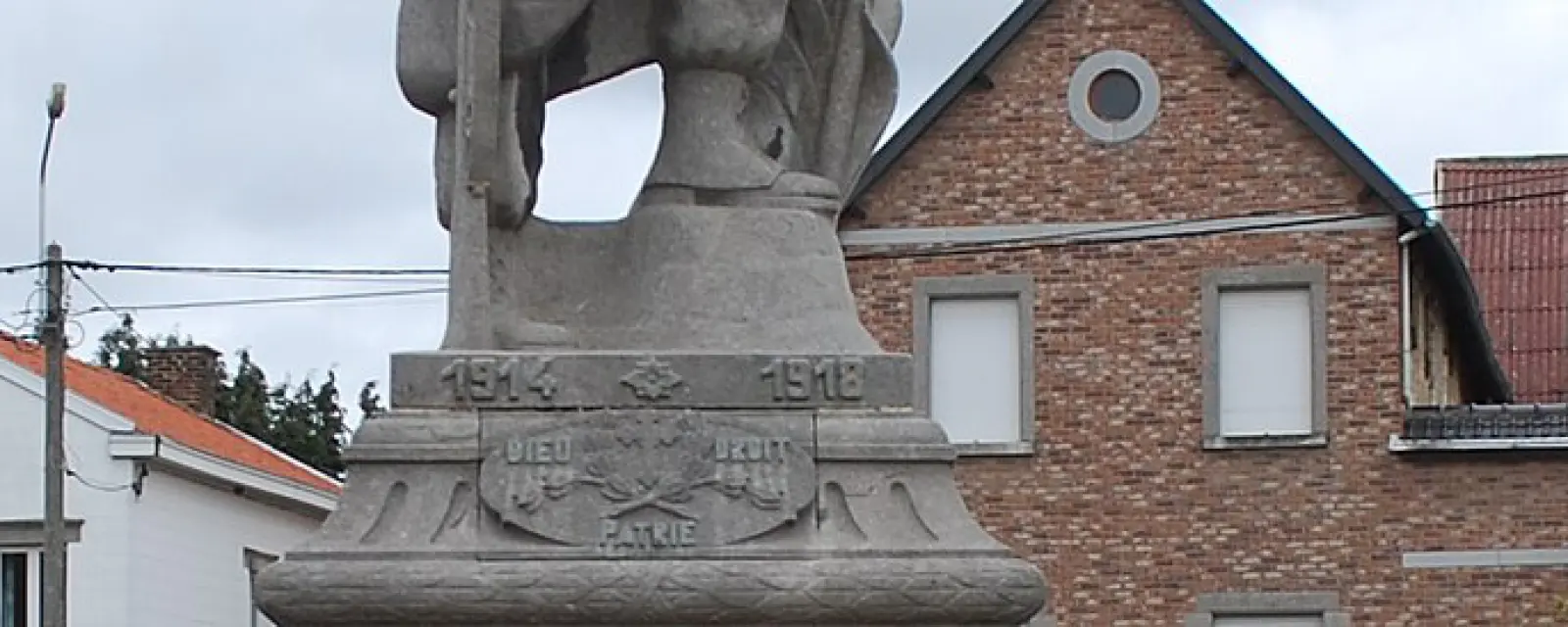
Its geography repeatedly made it Europe's battlefield: both world wars swept through, and the largest battles of the First World War were fought in Flanders.
After 1945, Belgium chose integration: one of the six founding members of the European Economic Community in 1957, with Brussels gradually becoming the administrative centre of that process.
Domestically, the twentieth century brought federalisation to manage tensions between the language communities — producing what is now among Europe's most complex state structures.
One further point belongs here, because it is viewed more critically as time passes: Belgian rule in the Congo in the late nineteenth and early twentieth centuries left a severe humanitarian legacy, and it remains a subject Belgian society is still confronting.
Culture & people
Around 11.7 million people, across three official language communities:
- Flanders in the north — speaking Dutch (often called Flemish), roughly 60% of the population;
- Wallonia in the south — speaking French, roughly 40%;
- a small German-speaking community in the east;
- Brussels, officially bilingual French-Dutch, where French predominates in daily life and English predominates in international circles.
This is not a cultural curiosity but the first practical decision you must make: whichever region you choose determines the language, because local administration, public schools and most employment outside international circles all operate in it. Moving from Antwerp to Liège means changing language entirely.
Belgians have a reputation for reserve, pragmatism, understatement and self-deprecating humour. Unlike the bluntness of the Netherlands next door, communication here is softer and more indirect — which many find more comfortable.
Food is a genuine source of pride: beer (hundreds of varieties, with Belgian beer culture UNESCO-listed), chocolate, fries, waffles. Comics are a respected art form — Tintin and the Smurfs both originated here.
Economy & opportunity
Belgium's economy is open and export-oriented, resting on chemicals and pharmaceuticals (one of Europe's major pharma clusters), logistics and ports — Antwerp is the continent's second-largest freight gateway — manufacturing, diamonds and jewellery, food, and a highly distinctive international services sector.
That last one deserves separate mention: around the European institutions and NATO sits an ecosystem of law firms, policy consultancies, trade associations, NGOs, media bureaux and diplomatic missions. This is a job market no other country hosts at comparable scale, and it recruits in English.
Demand for foreign labour concentrates in IT, pharmaceuticals and life sciences, engineering, healthcare, logistics, and the international professions above.
On tax, repeated because it matters most financially: the burden of taxes and social contributions on wages in Belgium is among the heaviest in the developed world. In return come broad social security, healthcare and pension systems. But when comparing an offer in Brussels against one in Dublin or Prague, compare net figures, not gross — this is a common and costly error.
One counterweight: Belgium generally does not tax capital gains for private investors in ordinary circumstances, and has no net wealth tax as Norway does. The tax structure leans heavily on income from labour rather than income from capital — relevant depending on where your income comes from.
As always: Belgian tax obligations do not replace those in your home country.
Immigration routes
No investment programme exists. The genuine routes:
- The single permit — the main door for employees. One permit covering both residence and work, with the regions handling the labour element and the federal level the residence element. It requires a contract, and conditions differ between Flanders, Wallonia and Brussels — each region maintains its own shortage-occupation list and salary thresholds.
- EU Blue Card — for highly qualified workers meeting a salary threshold, accumulating time across EU states.
- Professional card (carte professionnelle / beroepskaart) — for the self-employed and business founders. Authorities assess the economic usefulness of the activity: business plan, professional capability, potential to create value and jobs. It is not an investment programme — no capital threshold buys a card.
- Study — public university fees are low compared with the UK or the Netherlands, with a post-graduation period to find work.
- Family reunification — with income and housing requirements on the sponsor.
Citizenship
Belgium offers a five-year path, with conditions built around integration rather than time alone:
- five years of continuous lawful residence;
- proof of one of the three national languages at a basic level;
- proof of social integration — through a Belgian qualification, an integration course, or work history;
- proof of economic participation — usually counted in days of insured employment over recent years.
An alternative ten-year route exists, with lighter language conditions but requiring demonstrated ties to Belgian society.
The economic participation requirement is routinely overlooked: someone living in Belgium on foreign income, not working and not paying local contributions, can complete five years of residence and still not qualify. If citizenship is the goal, plan for insured employment from the outset.
Belgium has permitted dual citizenship since 2008 — naturalising does not require renouncing your original nationality under Belgian law. Information predating that is out of date.
Everyday life
Housing is far easier than in the Netherlands or Ireland. This is a genuine Belgian advantage that few mention: the market is not in crisis, purchase and rental prices are reasonable relative to neighbours, and homes tend to be larger. Many who work in Brussels live in a smaller nearby town and commute by train.
Healthcare: compulsory insurance through mutual funds, high quality with short waiting times compared with the UK, Ireland or the Nordics. Patients pay upfront and are largely reimbursed. It is among Europe's best-regarded systems for access.
Education: public schooling is free or nearly so, taught in the regional language. Brussels hosts many international and European Schools serving the institutional community — high quality, but expensive if your employer does not cover the fees.
Transport: a dense rail network in a small country makes intercity travel fast. Brussels has a metro. Road traffic around Brussels and Antwerp is heavily congested at peak times.
Location: Paris, London, Amsterdam and Cologne are all one to two hours away by high-speed rail. For frequent European travellers this is a real advantage.
What to prepare for: regional languages; complex administration, because the federal structure layers several tiers — the same matter may fall to the federal, regional or community level, and newcomers routinely spend time working out where to go; and grey weather.
Who should consider Belgium
A good fit if:
- You are targeting the international job market around the EU and NATO — law firms, policy consultancies, associations, NGOs, international media. Nowhere else hosts this market at comparable scale, and it recruits in English.
- You work in pharmaceuticals, life sciences, IT, engineering or logistics.
- You value manageable housing and quick access to healthcare — two areas where Belgium clearly beats the Netherlands and Ireland.
- You want an EU passport in five years and are prepared to take insured employment to satisfy the economic participation requirement.
- You travel Europe frequently: the central location is a genuine benefit.
Not a fit if:
- You are looking for an investment programme: Belgium has none.
- You compare job offers by gross salary: Belgian labour taxation is the developed world's heaviest, and this is where living standards are most easily miscalculated.
- You live on foreign income without local employment yet are aiming at citizenship: the economic participation condition will block you.
- You do not want to learn Dutch or French: living in English is feasible within Brussels's international circles, but far narrower outside them, and citizenship still requires a national language.