Overview
Belarus holds a rank-48 passport with 83 destinations reachable without a prior visa, with around 9.2 million people. The country is not in the European Union and not in Schengen.
Three things must be stated immediately, because all three are decisive:
🔴 One — male Belarusian citizens are liable for military service within the prescribed age range. Acquiring Belarusian citizenship places you in that category, and it applies to children as well. Families with sons at or approaching that age must weigh this before filing, not discover it afterwards.
🔴 Two — Belarus does not permit dual citizenship. Its law follows a single-nationality principle: a Belarusian citizen is recognised by the Belarusian state solely as a Belarusian citizen, regardless of any other nationality held. In practice this means you cannot invoke another nationality before Belarusian authorities, including for consular protection.
🔴 Three — sanctions from the European Union and several other states have applied since 2020-2021 and expanded after 2022. The practical effects on daily life: restrictions in banking and international payments, and airspace closures affecting Belarusian carriers, requiring routes to Europe to detour or connect.
This article states the situation as fact bearing on residence and citizenship decisions, not as political commentary.
Belarus has no citizenship-by-investment programme.
Geography & climate
Belarus lies in Eastern Europe, landlocked, bordering Russia to the east, Ukraine to the south, Poland to the west, and Lithuania and Latvia to the north-west.
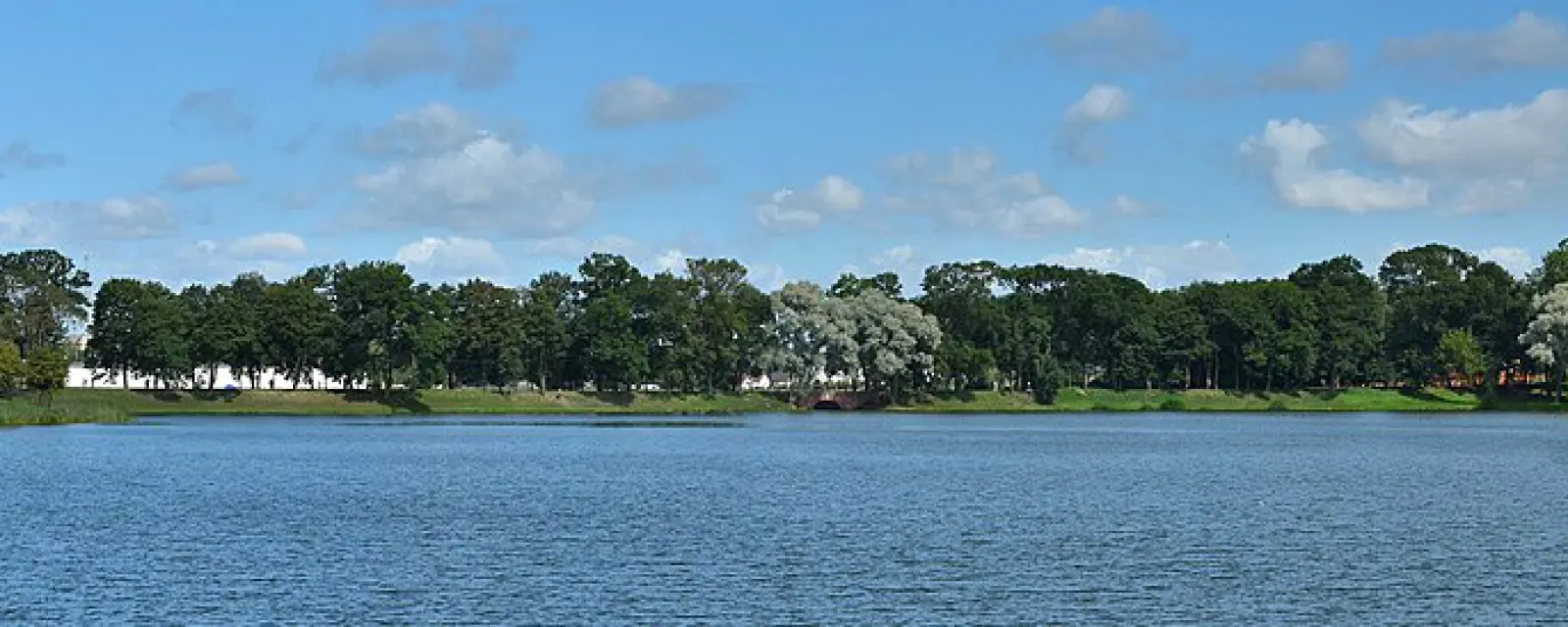
The terrain is flat with extensive forest, marsh and lakes — Belarus has high forest cover, and the Polesia marshes in the south form one of Europe's largest wetlands. The Białowieża Forest, shared with Poland, is a UNESCO site and home to European bison.
The capital, Minsk, sits centrally.
The climate is temperate continental: long cold snowy winters, mild warm summers.
🔴 The Chernobyl legacy: the 1986 nuclear disaster occurred in Ukraine, but wind patterns meant most of the fallout landed on Belarusian territory — estimated at around seventy percent. Some southern areas remain subject to land-use restrictions today. This matters if you intend to buy agricultural land or live in the southern provinces — verify the status of that specific area with the authorities.
History
This territory was a core part of the Grand Duchy of Lithuania and later the Polish-Lithuanian Commonwealth — a past many do not associate with present-day Belarus. Old Belarusian served as an administrative language of the Grand Duchy.
After the Commonwealth's partition in the late eighteenth century, the region fell under the Russian Empire, then became a Soviet republic.
The Second World War left extraordinarily heavy losses: Belarus lay on the main axis of advance and lost a share of its population among the highest of any combatant nation. Minsk was almost entirely destroyed and rebuilt afterwards — which is why the city has planned Soviet-era architecture on an unusually consistent scale.
Belarus declared independence in 1991 as the Soviet Union dissolved.
Since 2020, following domestic political events, relations with the European Union and several Western states changed fundamentally, producing the sanctions described above.
Culture & people
Two official languages: Belarusian and Russian. In practice, Russian clearly predominates in daily life, education, media and administration, particularly in cities. Belarusian is more used in rural areas and in cultural life.
The practical implication: Russian is the language to learn, an advantage for anyone who has studied it — a substantial number in older generations.
English is common in technology and among urban young people, less so elsewhere.
Belarusian society has a reputation for orderliness, cleanliness and safety — street crime is very low, and it is what foreign residents mention first.
A Vietnamese community exists in Belarus, formed in the Soviet era through training agreements, as in Russia, Czechia and Poland — but considerably smaller.
Economy & opportunity
Belarus retains an economic structure unlike other Eastern European countries: the state sector remains large, and the country preserved its Soviet-era manufacturing base rather than letting it dissolve.
The main sectors:
- Heavy machinery — MAZ trucks, and BelAZ, which produces some of the world's largest mining dump trucks; tractors and agricultural machinery.
- Potash fertiliser — Belarus is among the world's largest producers and exporters.
- Oil refining and petrochemicals.
- Agriculture and food processing.
The technology story — worth reading for what it teaches
Belarus built a genuinely successful information technology sector around the High-Tech Park in Minsk — a virtual technology park with very strong tax preferences for software businesses and staff.
The results were not on paper: the ecosystem produced World of Tanks by Wargaming, the messaging app Viber, and EPAM, one of the large software services companies listed in the United States. For years this was among Eastern Europe's most notable technology clusters per head of population.
🔴 But from 2020, and especially after 2022, a very large part of that sector relocated — companies moved headquarters and staff to Poland, Lithuania, Georgia, Armenia, the UAE and elsewhere. It was among the region's largest short-period movements of technology talent.
The lesson is worth remembering for anyone assessing where to place a business:
Tax incentives can build a sector. But that sector only stays when the other conditions — legal, travel, payments, and staff's sense of security — hold steady alongside. Technology workers are a mobile group, and they move when they need to. Tax incentives cannot hold them if the rest cannot.
Living costs are low by European standards.
As always: Belarusian tax obligations do not replace those in your home country.
Immigration routes
No investment programme. The routes in law:
- Work permits and temporary residence — employer-sponsored.
- Residence through investment or business activity.
- Study — universities with a tradition in engineering and medicine, low fees by Western standards, and an international student presence.
- Residence through marriage or family relationship.
- Permanent residence — after continuous temporary residence.
One point worth noting because it runs against the general trend: Belarus has expanded visa-free entry for citizens of many countries in recent years, subject to conditions on entry points and length of stay. Terms vary by nationality, so check current rules for your passport.
Citizenship
Naturalisation generally requires around seven years of permanent residence, ability in one of the two official languages, lawful means of support and a clean record.
🔴 And the two decisive points from the opening, repeated:
- No dual citizenship — the Belarusian state recognises you solely as a Belarusian citizen.
- Male citizens within the prescribed age range are liable for military service.
Together with a rank-48 passport and the current sanctions environment, we do not regard Belarusian citizenship as a sensible objective to plan around at present.
Everyday life
Living costs are low, and Minsk is a clean, orderly city with good urban infrastructure — a metro, and cheap punctual public transport.
Safety: street crime is very low; a genuine strength and consistently noted.
Healthcare: the public system has a strong tradition and broad coverage; quality is reasonable in the larger cities.
Education: free public schooling; universities are strong in engineering and medicine.
Travel: as noted — airspace closures affect Belarusian carriers, so routes to Europe detour or connect through third countries. Travel to Southeast Asia is a long multi-leg journey.
International payments: the largest practical obstacle in daily life. Cards issued in Belarus face restrictions abroad, and many foreign cards do not work there. Anyone with foreign income or financial obligations should arrange a solution before arriving, as with Russia elsewhere in this series.
Winter is long and cold — a serious adjustment for families from a tropical country.
Who should consider Belarus
It may fit if:
- You already have ties — you studied there, have family, or run a business — and Russian is not a barrier.
- You work in trade, manufacturing or agri-products connected to this market, and have completed sanctions compliance review for your activity.
- Your children are studying engineering or medicine and you want to use the low fees.
Not a fit if:
- 🔴 Your family includes sons at or approaching conscription age and you are considering naturalisation.
- 🔴 You want to keep your original nationality while naturalising: Belarus does not permit it, and recognises you solely as a Belarusian citizen.
- You hold foreign income or assets and need convenient international transfers and payments.
- You intend economic transactions without sanctions compliance review by a specialist lawyer — a legal risk in third countries.
- You are aiming at passport value: rank 48 with 83 destinations, plus the constraints above.
- Your family would struggle with long, cold winters.