Overview
The Bahamas holds a rank-18 passport with 141 destinations reachable without a prior visa. It is an archipelago of roughly 700 islands with around 410,000 people, lying just south-east of Florida.
The Bahamas has no citizenship-by-investment programme. But it does offer something many people are looking for: economic permanent residence tied to property purchase above a threshold, alongside a tax regime that levies almost nothing on personal income.
Three things to grasp immediately, in order of importance:
One — the tax regime. The Bahamas levies no personal income tax, no capital gains tax, no inheritance tax and no dividend tax. Revenue comes chiefly from VAT, import duties and fees. This is the main reason wealthy individuals look here.
Two — residency is not citizenship, and here the gap is very wide. Economic residence grants the right to live there, but naturalisation for foreigners is very difficult and highly discretionary. Do not buy property expecting a passport at the end of it.
🔴 Three — hurricane risk is real and severe. The Bahamas sits in the middle of the Atlantic hurricane zone. In 2019, Hurricane Dorian devastated the Abaco islands and Grand Bahama, causing very heavy loss of life and property. This is not a theoretical risk — it must enter your financial planning, insurance and choice of island. Unlike Barbados, which sits off the main track, the Bahamas lies directly on it.
Geography & climate
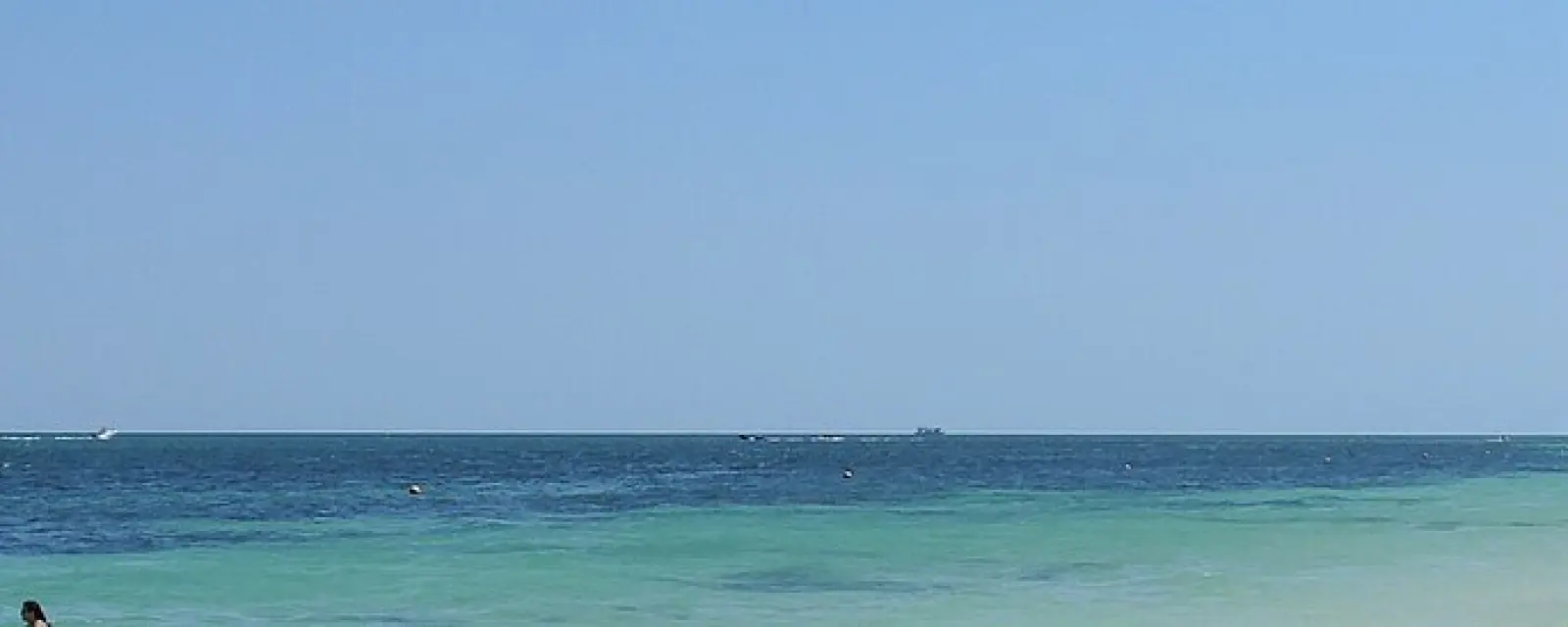
The Bahamas spreads across a wide stretch of sea south-east of Florida, comprising roughly 700 islands and more than 2,000 cays, of which only about thirty are inhabited.
Its proximity to the United States is notable: from Bimini to the Florida coast is only about 80 km. That makes the Bahamas convenient for those with work or family in the US — Nassau to Miami takes under an hour by air.
The capital, Nassau, on New Providence, holds most of the population. Grand Bahama, with the city of Freeport, is the second centre. The rest — collectively the Family Islands — are sparsely populated and quiet.
The terrain is extremely low: the highest point in the country is only around 63 metres, and most land lies just a few metres above sea level. That is why sea-level rise and storm surge are genuine long-term concerns rather than distant ones.
The climate is tropical and warm year-round. The Atlantic hurricane season runs from June to November — a timeframe to know before planning to live or buy there.
History
San Salvador in the Bahamas is thought to be where Christopher Columbus first landed in the Americas in 1492.
The Bahamas became a British colony, and in later centuries Nassau had a famous period as a pirate base in the early eighteenth century. Plantation economy and slavery followed, then a shift to maritime activity.
In the twentieth century the Bahamas developed into an offshore banking and tourism centre. Proximity to the United States shaped most of the economy.
The Bahamas gained independence in 1973 and is a Commonwealth realm — unlike Barbados, which became a republic in 2021, the Bahamas retains the British monarch as nominal head of state.
Culture & people
English is the official language, used in every sphere. Daily life includes an English-based creole known as Bahamian Dialect. No new language to learn is a clear advantage.
Society is shaped by both Britain and the United States — a British-style legal system, but popular culture, goods and television close to America.
Junkanoo — a street festival of music and vivid costume held around the turn of the year — is the country's cultural emblem.
Bahamians have a reputation for friendliness and openness, with an unhurried island rhythm.
There is virtually no Vietnamese community in the Bahamas.
Economy & opportunity
Two pillars: tourism — a very large share of the economy and employment, mostly from the United States, including cruise traffic — and financial services, covering private banking, trusts and wealth management.
Local employment opportunities for foreigners are very limited: the market is small, and policy strongly prioritises Bahamian workers. Work permits require proof that no qualified Bahamian is available.
The realistic path here is not employment but bringing assets or bringing your work with you.
On costs: very high. Almost everything is imported and dutied, so food, electricity and vehicles cost considerably more than in the US or Europe. The absence of income tax is real, but a meaningful part of that benefit is offset by the cost of living — weigh both sides when comparing.
🔴 And this is exactly where emphasis is warranted: no income tax in the Bahamas does NOT mean your home-country tax obligations end. Your tax residency at home is determined by your home country's own rules, independently of whether the other country levies anything. This is the most common and most expensive misunderstanding among the no-income-tax jurisdictions. Consult a tax specialist before shifting residence and before moving assets.
Immigration routes
Economic permanent residence
The Bahamas grants permanent residence to those who purchase Bahamian property above a defined value, with accelerated consideration for higher investment levels.
The points to understand precisely:
- This is a residence right, not citizenship and not a passport.
- Permanent residence does not automatically confer the right to work in the Bahamas — employment requires separate authorisation.
- Applicants still undergo background vetting.
- Thresholds and procedures change with current regulations, so consult the latest version.
For someone with assets and foreign income seeking a stable base near the United States, English-speaking, with no income tax — this is a coherent and clear option.
Other routes
- Annual residence permit for the self-supporting — for those able to maintain themselves without local employment, renewed yearly.
- Work permits — requiring an employer and proof that no qualified Bahamian is available; a narrow door.
- Residence through marriage to a Bahamian citizen.
Citizenship — set expectations correctly
This is the most important part of the article, because it is where misunderstanding is costliest.
Naturalisation for foreigners in the Bahamas is very difficult. Even after many years of permanent residence, the grant of citizenship is discretionary — the authorities decide, and there is no entitlement even on meeting the formal conditions. Approvals are few.
Bahamian rules on holding multiple nationalities are also strict, and warrant careful checking before planning.
The practical conclusion: treat the Bahamas as a place to RESIDE and optimise assets, not a place to obtain a passport. Those seeking a Caribbean passport should look at the five countries with citizenship-by-investment programmes: St Kitts and Nevis, Antigua and Barbuda, Dominica, Grenada and St Lucia.
Everyday life
Living costs are very high — as noted, the flip side of the no-income-tax regime.
Housing: a developed high-end property market, particularly in Nassau, Paradise Island and certain Family Islands. Hurricane insurance is a major and unavoidable cost, and premiums have risen appreciably after recent major storms. Ask the insurance price before the house price.
Healthcare: private facilities in Nassau are reasonable; but for specialist cases the standard approach is flying to Florida — under an hour away. International health insurance with medical evacuation is effectively mandatory.
Education: private and international schools exist in Nassau at high fees.
Connectivity: excellent toward the United States — many daily direct flights to Miami, Fort Lauderdale and New York. Travel to Asia is a long multi-leg journey.
Currency: the Bahamian dollar is pegged 1:1 to the US dollar, and US dollars are widely accepted domestically — genuinely convenient for those earning in US dollars.
Safety: varies by area; some parts of Nassau have notable crime rates, while the Family Islands are very peaceful. Choosing where to live is an important decision.
🔴 Hurricanes: noted once more because this shapes everything else. The season runs June to November. Homes need hurricane-standard construction, an evacuation plan is necessary, and adequate insurance is essential. This is a standing cost and risk, not a rare incident.
Who should consider the Bahamas
A good fit if:
- You hold substantial assets and foreign income, and want a stable base with no income, capital gains or inheritance tax.
- You have work, family or interests in the United States — the distance to Florida is a very concrete geographic advantage.
- You want an English-speaking country with a British-style legal system and a US-dollar-pegged currency.
- You understand and accept that this is a place to reside, not a place to obtain a passport.
Not a fit if:
- 🔴 You are buying property expecting Bahamian citizenship eventually: naturalisation here is very difficult and highly discretionary.
- You believe moving to a no-income-tax country ends your home-country tax obligations — the most expensive misunderstanding in this category.
- You need local employment: the market is small and Bahamian-worker priority is strict.
- Your family cannot accept hurricane risk as a constant factor — the Bahamas lies directly on the track, quite unlike Barbados.
- You expect a Caribbean island to be inexpensive: costs here are very high.