Overview
Ireland holds a rank-4 passport with 164 destinations reachable without a prior visa. It is an EU member using the euro, and it combines a set of traits no other EU state offers:
- An English-speaking society in everyday life.
- A five-year citizenship path with no language test and no civics test.
- Irish citizens may live and work in both the European Union and the United Kingdom — thanks to the Common Travel Area, preserved after Brexit.
That last point is what makes the Irish passport singular: it is the only passport in the world conferring residence and work rights across both blocs.
But the essential caveat, because this is where people are misled: Ireland's Immigrant Investor Programme (IIP) CLOSED to new applications on 15 February 2023. There is no successor. Anyone still offering "Irish residency by investment" is either working from stale information or selling something that no longer exists.
Geography & climate
Ireland occupies roughly five-sixths of the island of Ireland at Europe's western edge; the north-east is Northern Ireland, part of the United Kingdom — two distinct political entities on one island, frequently confused.
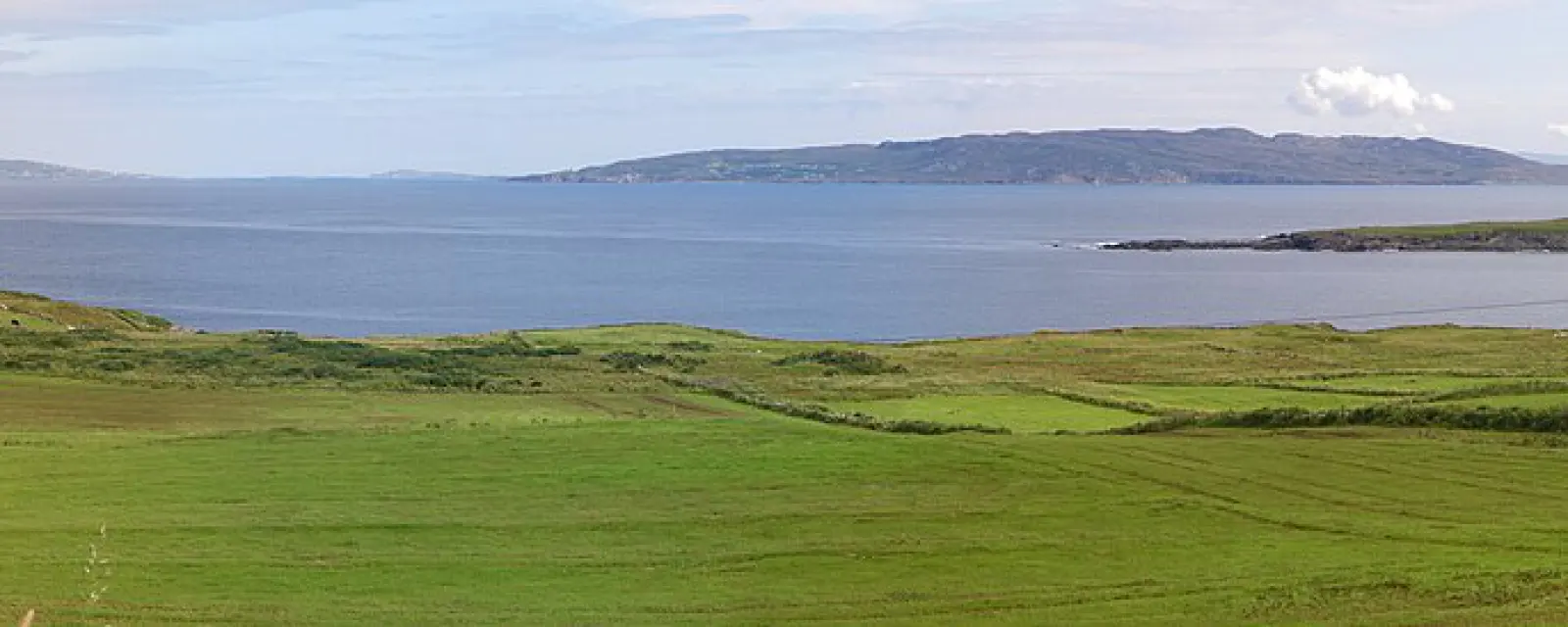
The terrain is low green hills with coastal mountain ranges, and nowhere lies more than about 110 km from the sea. The capital, Dublin, sits on the east coast, facing Britain.
The climate is unusually mild for the latitude thanks to the Gulf Stream: winters rarely hold snow, summers rarely exceed 22°C. In exchange comes rain, spread through the year, with heavy cloud. Not Nordic-cold, but damp and short on sun — those used to southern Vietnam's sunshine often find it heavier going than expected.
History
Ireland was under British rule for centuries. The Great Famine of the 1840s killed around a million people and drove another million abroad — the island's population fell by roughly a quarter and took more than a century and a half to recover. That is the origin of the vast Irish diaspora in the United States, Britain, Canada and Australia, estimated in the tens of millions — and the reason citizenship by descent here is unusually generous.
After the war of independence, the Irish Free State was established in 1922, becoming a full republic in 1949.
For most of the twentieth century this was a poor country with net emigration. The turn came in the 1990s: low corporate tax, a young English-speaking workforce and EU membership drew American technology and pharmaceutical groups to base their European operations here. The "Celtic Tiger" years took Ireland from Western Europe's poorest country to among the world's highest incomes per head.
Brexit created a new position for Ireland: the only remaining English-speaking country in the European Union, and the natural gateway for businesses wanting to stay inside the single market.
Culture & people
Around 5.1 million people. The Irish have a reputation for openness, talk and humour — a sharp contrast to Nordic reserve. For Vietnamese arrivals, this is usually the easiest of the high-income EU countries in which to strike up a conversation.
The two official languages are Irish (Gaeilge) and English. Irish is taught in schools and appears on signage, but daily life and work run in English. Newcomers need no Irish to live, work or naturalise.
Traditions in music, literature and pub life are genuine rather than tourist product — Ireland has produced four Nobel laureates in literature from a population of barely five million.
Society has changed quickly over two decades, from a conservative Catholic country to one of Europe's more liberal.
Economy & opportunity
Ireland is the European base for much of American technology and pharmaceuticals: Google, Meta, Apple, Microsoft, Pfizer and Johnson & Johnson all run substantial operations here, alongside financial services and medical devices.
That produces a labour market well suited to skilled foreigners: work conducted in English, international hiring as routine, and no new language to learn — Ireland's single greatest advantage over every other EU country.
Demand concentrates in IT and data, pharmaceuticals and biotech, healthcare and nursing, finance and construction.
Low corporate tax underwrites the model, but personal income tax is not low — the higher rate applies from a comparatively early income threshold. Do not conflate the two: the advantage is for companies, not employees.
As always: Irish tax obligations do not replace those in your home country.
Immigration routes
The investment route — closed
The IIP stopped accepting new applications on 15 February 2023. It had allowed residence through investment in enterprise, approved funds, real-estate trusts or an endowment to a community project. The Irish government ended it following recommendations concerning risk and whether the benefits justified it. No successor programme exists.
Applications lodged before the closing date continue to be processed under the old rules, but that concerns those already in the queue — it is not a door for newcomers.
What remains
- Critical Skills Employment Permit — the main route today. For occupations on the skills-shortage list, requiring an employment contract and a qualifying salary. Two significant advantages: it leads to long-term residence rights comparatively quickly, and it allows an accompanying spouse to work.
- General Employment Permit — stricter, subject to a labour-market needs test.
- Study — non-EU/EEA students pay tuition, with a post-graduation permit to seek work.
- Family reunification.
- Stamp 0 — a residence category for the financially self-sufficient, but it carries no right to work, no access to public services, and NO path to citizenship. Understand that limit before treating it as a solution.
Citizenship by descent — the overlooked route
Ireland's descent provisions are among Europe's most generous: anyone with a grandparent born on the island of Ireland may register on the Foreign Births Register and obtain Irish citizenship — with no requirement ever to have lived in Ireland.
This is irrelevant to most Vietnamese applicants, but worth stating because it costs nothing in investment terms and many families with Irish ancestry do not realise they qualify.
Naturalisation
The standard requirement is five years of lawful residence within the preceding nine, with the final year continuous, plus an intention to continue residing there and a clean record. There is no language test and no civics test — a rarity in Western Europe.
One caution: time spent in Ireland on a student permission does NOT count toward those five years. This detail throws many plans off by several years.
Ireland permits dual citizenship.
Everyday life
Housing is the most serious problem. Ireland is in a prolonged housing crisis: supply is short, Dublin rents are among Europe's highest, and competition for each property is fierce. This is not a minor detail — it is the practical reason people with good jobs still reconsider. Anyone planning a move should solve housing before anything else.
Living costs are high, comparable to wealthy Western Europe.
Healthcare: a two-tier system — public provision exists but with long waits, so most working people also buy private cover. Unlike the Nordics, private insurance here is effectively a fixed line in the household budget.
Education: free public schooling of good quality; universities charge non-EU students, with EU citizens heavily favoured.
Transport: public transport outside Dublin is weak; most families need a car.
Not in Schengen. Ireland and Cyprus are the two EU states outside Schengen. This means an Irish residence permit does not confer free movement within the Schengen area, and Vietnamese passport holders need a separate Irish visa — a Schengen visa will not do. This is a very common misunderstanding.
Who should consider Ireland
A good fit if:
- You work in technology, pharmaceuticals, finance or healthcare and want an EU country where no new language is required.
- You are aiming at EU citizenship and want to avoid a language exam — Ireland is one of very few such doors left in Western Europe.
- You value that an Irish passport grants the right to live and work in both the EU and the UK — no other passport does this.
- Your family had a grandparent born on the island of Ireland: check the Foreign Births Register before considering any paid option.
Not a fit if:
- You are looking for an investment programme. The IIP closed on 15 February 2023 with no replacement. Anyone marketing it is selling something that no longer exists.
- You need a permit conferring free movement in Schengen — Ireland is outside it.
- You have no housing plan. The crisis here is real and sustained; it must be addressed in advance, not afterwards.
- You intend to accumulate residence through study: student time does not count toward naturalisation.